Skip to content

Projects

Velocys

Advancing Sustainable Aviation Fuel in the UK

Aviation is one of the hardest sectors to decarbonize — and one of the most urgent. Bechtel is helping to change that. Through a long-term partnership with Velocys, a pioneer in sustainable fuels technology, we’ve provided front-end engineering and design services for two landmark projects in the UK that are laying the technical and industrial groundwork for large-scale sustainable aviation fuel (SAF) production.

SAF is a cleaner alternative to conventional jet fuel — one that can reduce CO2 emissions throughout its lifecycle by up to 80% and be used in existing aircraft without modification. Our work with Velocys also supports the UK’s ambitious carbon emissions goals, including reaching net zero by 2050 and zero domestic aviation emissions by 2040. The proposed Altalto Immingham plant and e-Alto project are part of how that ambition gets turned into reality — introducing sustainable fuel options for global markets and accelerating the energy transition.

By the Numbers

Up to 80%
Lower Emissions

Up to 80% lower lifecycle CO2 emissions with SAF compared with traditional jet fuels

70K
Tonnes

70,000 tonnes of CO2 avoided annually with the e-Alto process

350K
Tonnes

350,000 tonnes of CO2 avoided annually with the proposed Altalto facility

1000
Flights

1,000 flights from London to New York per year could be powered by Altalto’s expected output

Altalto: Turning Waste Into Fuel

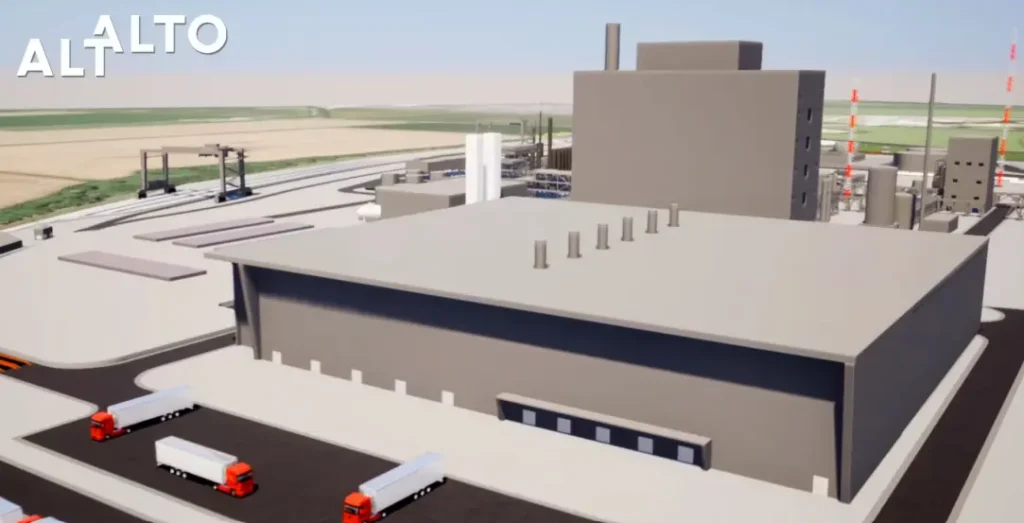
Velocys selected Bechtel to lead the front-end engineering and design (FEED) study for the proposed Altalto Immingham plant, one of the most advanced waste-to-SAF projects in the world. The project is a joint development between Velocys and British Airways, supported by a £27 million grant from the U.K. Department for Transport’s Advanced Fuels Fund.

The plant was designed to convert residual household and commercial waste — material that would otherwise go to the landfill — into jet fuel using Velocys’ Fischer-Tropsch technology.

At full capacity, the plant was engineered to produce approximately 20 million gallons (80 million liters) of SAF per year, with net negative carbon emissions. That’s enough SAF to power 1,000 flights from London to New York annually, saving 350,000 tonnes of carbon dioxide each year and reducing greenhouse gas emissions by 150% compared to conventional jet fuel.

e-Alto: The Next Generation of Jet Fuel

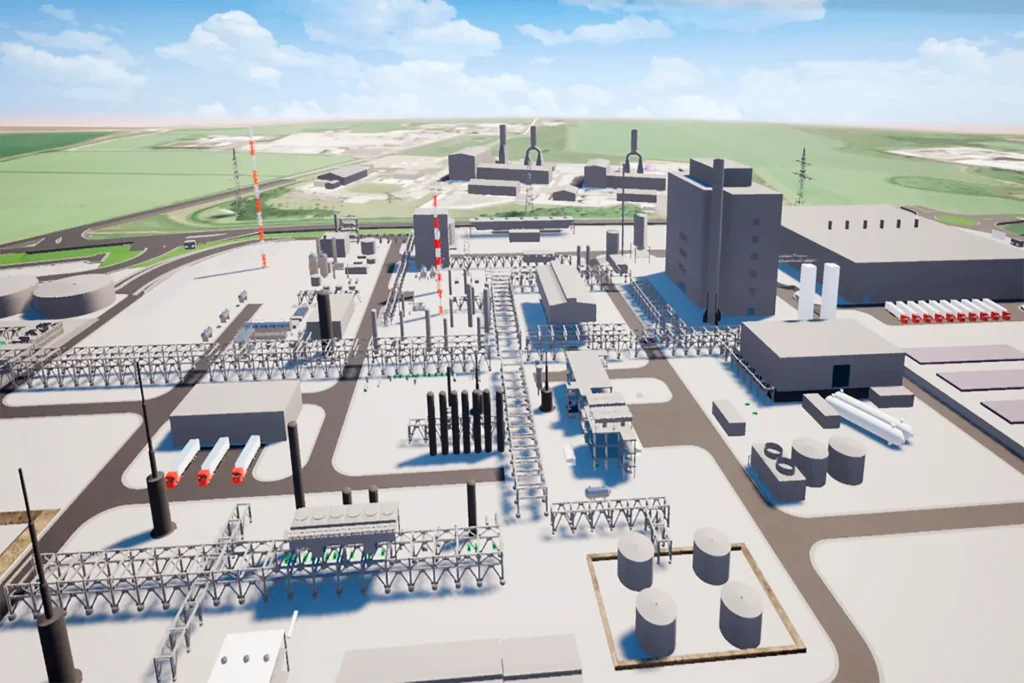
Bechtel also conducted the pre-FEED for e-Alto, a next-generation e-fuels project that takes a different approach to SAF production. Unlike Altalto, this method is powered entirely by renewable electricity rather than waste.

The process combines green hydrogen, produced by electrolysis using renewable power, with carbon dioxide captured from a local waste-to-energy power station through a reverse water-gas shift process to make syngas — a mixture of hydrogen and carbon monoxide. The syngas is then converted into liquid fuels using Velocys’ proprietary Fischer-Tropsch gas-to-liquid technology. The result is a low-carbon SAF made from captured emissions and clean electricity, with no new carbon introduced into the process.

Bechtel’s pre-FEED assessed the feasibility and technical requirements to make SAF at the plant, including producing an early-stage cost estimate. This critical work determines if the technology is viable at scale.

At full capacity, e-Alto has the potential to produce approximately 500 barrels of SAF per day — helping avoid nearly 70,000 tonnes of carbon dioxide emissions annually. 

A Partnership Built on Trust

Our work with Velocys is anchored by a master relationship agreement and a continuing technical services agreement (CTSA) — establishing a framework for ongoing collaboration as we develop an engineering, procurement, and construction execution model for the sustainable fuels projects.

Our Technologies & Solutions team was instrumental in launching this partnership, conducting a due diligence review of Velocys’ chosen process technologies — including municipal solid waste processing, gasification, and the Fischer-Tropsch gas-to-liquids process — and laying the technical groundwork.

In January 2026, Bechtel signed a three-year extension to the CTSA, a testament to the trust and momentum built through years of collaboration. Altalto and e-Alto are two of three SAF projects Bechtel has undertaken with Velocys, alongside the Bayou Fuels Project in the United States. These projects don’t just demonstrate what’s possible — they help define the industrial blueprint for getting there. For Bechtel, this work is a cornerstone of our growing energy transition portfolio and reflects our commitment to building a cleaner, more sustainable world