-
Neil Nuñez
Senior Project Manager, Semiconductor Plant Facility
How Digital Tools Are Redefining Safety on Complex Projects
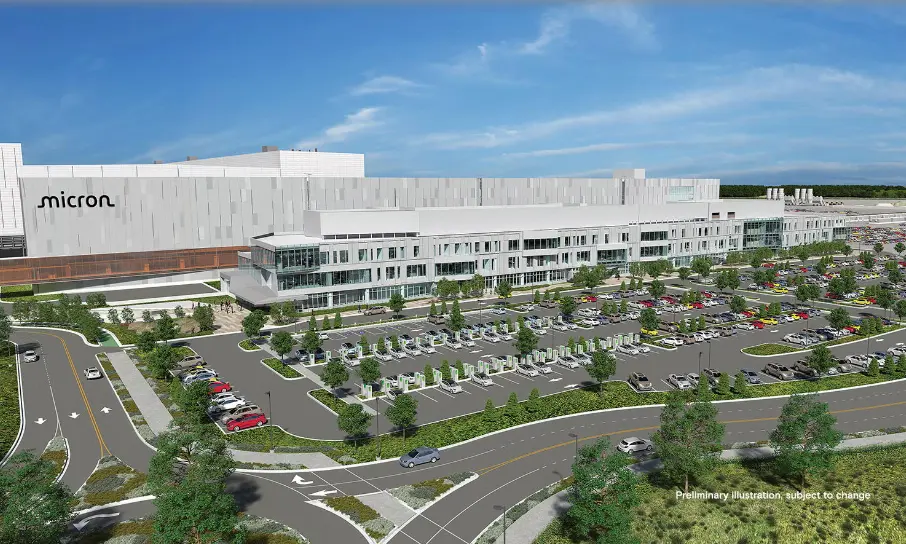
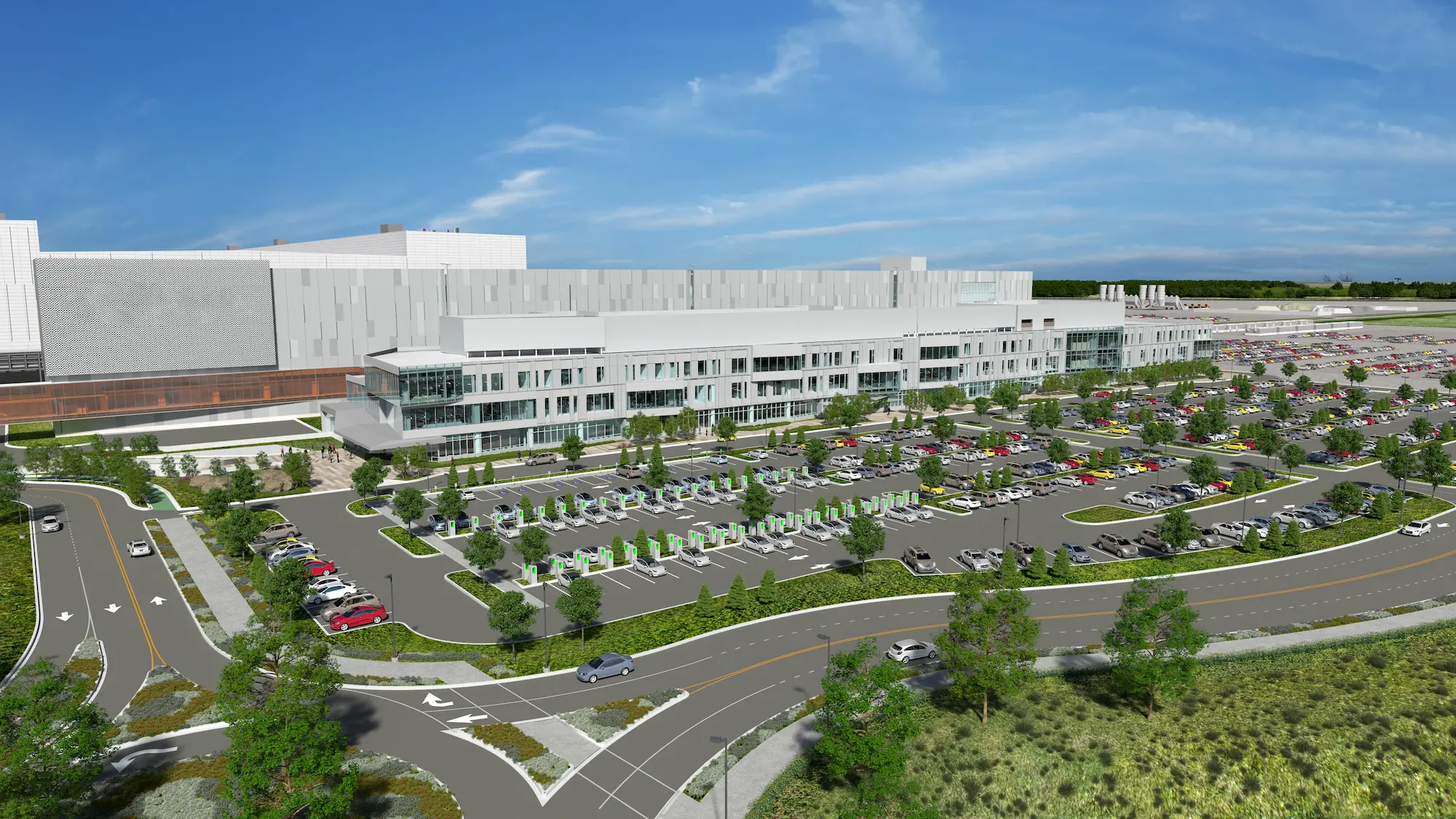
At one of the largest semiconductor plant construction projects in the United States, safety is the first order of business — every single morning. Before any tool is lifted, teams gather to talk through what work is planned, what hazards exist, and whether every person on that crew is prepared for the day ahead.
For decades, this process relied on paper forms, and they served the work well. As projects grew in scale and complexity — with larger, more diverse workforces and conditions that changed hour by hour — the need for faster, clearer, and more connected information became essential. Paper-based forms were vulnerable to weather and handling, handwriting wasn’t always easy to interpret, and information was typically reviewed after the fact, limiting real-time insight for supervisors. Updates could take weeks to make their way back to the field, and the valuable data captured in thousands of daily safety conversations often remained stored rather than actively used to inform future decisions.
We saw this an opportunity to rethink how we approached this process: moving from paper to a digital, field‑driven mobile application that improves understanding, visibility, and responsiveness in real time.
Why Modern Safety Requires More Than Compliance
Today’s construction jobsites are dynamic environments — workforces are multilingual, conditions shift hourly, and the consequences of missed hazards are immediate. In that environment, a safety process that produces paperwork but not insight is only doing half its job.
The challenge on complex projects has never been a lack of commitment to safety. It has been giving our field teams tools that match the complexity of the work. A paper card filled out in a staging area, translated by a crew member, and collected at end of day belongs to a different era of construction.
The difference between a paper form and a connected digital system is the difference between compliance and insight — insight that enables timely action and materially improves safety outcomes.
Five Ways Digital Hazard Assessments Improve Safety & Performance
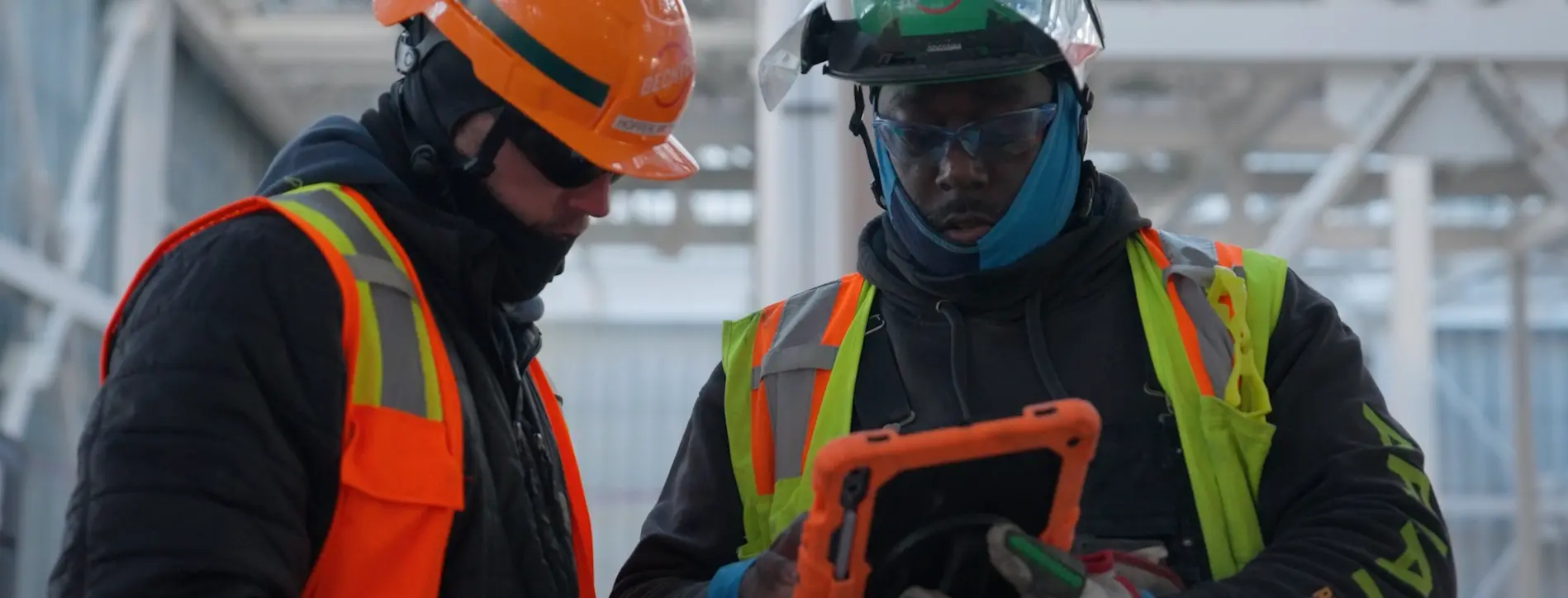
Working alongside craft professionals, we developed a Digital Field Level Hazard Analysis app that allows crews to complete assessments where the work is happening, make real-time updates as conditions change, and automatically save entries with electronic signatures for accountability. This tool improves performance in five important ways.
- Higher-quality inputs with less friction. Voice-to-text capability allows crew members to describe hazards verbally — with their gloves on. Guided workflows ensure nothing critical gets skipped. The result is more accurate, more complete assessments — not because we added requirements, but because we removed obstacles.
- Real-time visibility for field leaders. Geo-location technology displays completed assessment on a live site map. Supervisors can see where the work is happening, identify where active hazards have been flagged, and direct oversight where it is needed most — in real time, not after the fact.
- Smarter workforce readiness. The app integrates directly with Bechtel’s training and qualification data. Before work begins, supervisors can see whether crew members have the certifications required for their assigned tasks — including whether training records are outdated or expired. Gaps that previously only surfaced after an incident now surface before the work starts.
- Instant agility when requirements change. Under the paper system, even a minor update required redesigning, printing, and distributing thousands of assessment cards — a process that could take weeks. With the digital tool, updates are live across the site by the following morning. That responsiveness has been one of the most significant drivers of field adoption, reinforcing that feedback leads to action.
- Stronger communication across a diverse workforce. On this project, a predominantly bilingual workforce meant critical safety conversations often depended on working with a translator. The digital tool’s instant English–Spanish toggle removes that dependency, allowing every crew member to engage with hazard assessments in the language they are most comfortable using. Consistency, clarity, and inclusion are now built into the system itself.
A Key Shift in How We Use Safety Data
What surprised me most about this initiative was not any individual feature. It was what the data made possible.
Paper hazard assessments were compliance records. Once collected, they went into physical storage. Now, every submission — including free-form descriptions entered by crew members — becomes searchable and analyzable. Using advanced analytics tools, teams can review entries across thousands of daily assessments and identify patterns that would have been difficult to notice on paper: recurring hazard types by work area, gaps between planned and actual risk, crew composition trends that signal where additional oversight or training may be needed.
The automated supervisor dashboard has changed how our field leadership engages with safety information. Insights that once took weeks to compile are now available daily. We are moving from a reactive safety model toward one that supports earlier awareness and more informed intervention.
A Scalable Model for the Industry
As more organizations begin to digitize hazard assessments, speed alone isn’t the differentiator. The real opportunity comes from integration — connecting daily field‑level safety conversations with training records, qualification data, real‑time location, and advanced analysis in a single workflow. The result is a system that does more than document hazards. It helps teams recognize and address risks earlier.
This value becomes most evident in environments defined by extraordinary scale, compressed schedules, and significant workforce complexity. Tools that perform well in these conditions can scale across energy, infrastructure, and manufacturing projects.
The future of construction will belong to companies that connect people, data, and field execution in real time. That is where Bechtel is investing — and how the next era of safety leadership will be defined.
-
Neil Nuñez
Senior Project Manager, Semiconductor Plant Facility