-
Jake Mumm
General Manager Public Infrastructure
A History of Ambitious Infrastructure
In 1919, a young Dwight D. Eisenhower joined a U.S. Army convoy on a cross-country trip to assess the state of America’s still-nascent roadway infrastructure. During the journey, the convoy encountered long stretches of unpaved, disconnected, and often impassable terrain, leaving a lasting impression on him.
Decades later, while serving as a World War II general, he was struck by the speed and efficiency of Germany’s autobahn system—a modern, integrated highway that stood in sharp contrast with America’s patchwork network of roads. So once elected President, Eisenhower resolved to build America’s version of the autobahn—but even more ambitious: it became the U.S. Interstate Highway System.
Today, our nation finds itself in a similar position. With high-speed rail (HSR) systems gaining traction worldwide—and significant networks already established in Asia and Europe—faster travel times, reduced congestion, and interstate connectivity across North America beckon.
A Once-in-a-Generation Opportunity
Recent developments give reason for optimism: State and city leaders as well as private developers are stepping up with ambitious plans to fund HSR, and public support remains high.
And in June, U.S. Transportation Secretary Sean P. Duffy announced reforms to the department’s National Environmental Policy Act (NEPA) implementing procedure, the most ambitious overhaul in 40 years. These changes consolidate six NEPA processes into one streamlined policy— driving significant efficiencies without compromising rigorous oversight for environmental reviews and permitting, by several years in some cases.
We’d like to see permitting reform go even further. Right now, HSR takes a long time to build not only because of environmental reviews—but also because of the large land acquisitions required to accommodate the complexity of the track. By creating a special fast-track process for HSR, similar to what the government has done for semiconductor projects, we could accelerate HSR development.
Still, even without this action, the future looks bright for HSR. As Bechtel wrote in its recent HSR white paper, with growing momentum, expedited permitting, and a willingness to find solutions, we have a once-in-a-generation opportunity to deliver HSR for the nation, starting with the following actions:
1. Build Out a Robust High-Speed Rail Industry
Great infrastructure can only be achieved with a strong workforce—skilled labor, mature supply chains and megaproject delivery experience. Some of this will be a challenge to begin with—but not insurmountable.
In the early phases, we’ll need to rely on international partners for key components, systems, and specialized labor. However, that reliance should be transitional. By collaborating with overseas partners today, we can jumpstart projects while building U.S. capacity over time—through workforce training, vocational programs, and investment in manufacturing infrastructure.
The U.S. already has strengths in tunneling, heavy civil construction, and complex project management. By combining these capabilities with targeted investment in a homegrown HSR supply chain and labor, we can develop a competitive and resilient high-speed rail industry.
2. Adopt a Robust Delivery Model
The most important decision any HSR project will make is choosing the right delivery model. Success hinges on how well the model aligns roles, responsibilities, and incentives from the outset.
This starts with defining clear objectives, scope, and performance expectations—so every stakeholder is working toward the same outcome. Designers, builders, and operators must be integrated into a single delivery team. This structure reduces interface risk and speeds decision-making.
But a solid structure alone isn’t enough. As scale and complexity increase, so does the need for real-time visibility into cost, schedule, scope, and risk, to address issues early and avoid hiccups later on. Final-stage activities like testing, commissioning, and handover must be planned from the beginning to ensure a smooth, on-time opening.
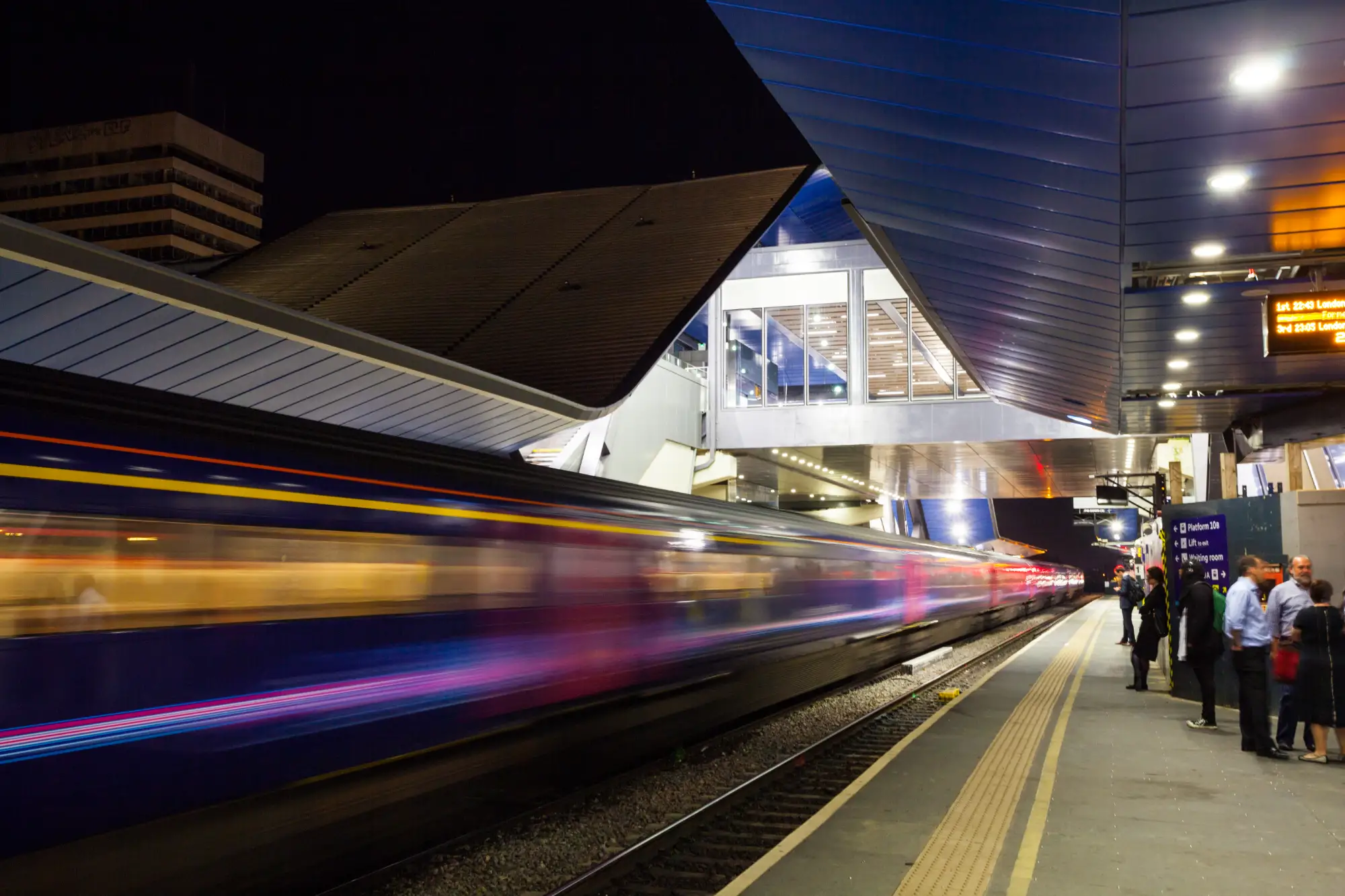
Bechtel’s work on the UK’s High Speed 1 (HS1) is a proven example: we were able to deliver the project $128 million under budget because we implemented disciplined controls, cost and time trend forecasting, and quantitative risk analysis. We also aligned with our customer’s goals early on to ensure there were no surprises during handover.
HS1 also shows us the impact of good delivery goes beyond rail: the redevelopment of HS1’s iconic St Pancras station led directly to the transformation of 67 acres of surrounding land into a vibrant mixed-use area with residential, commercial, and public spaces.
3. Pursue Innovative Funding Methods
Yes, federal funding is essential—but it’s not enough. To deliver high-speed rail at scale, the U.S. must also unlock private capital. That requires creating the right conditions for investment, where risk is manageable, timelines are reliable, and incentives are aligned.
Well-structured public-private partnerships—or P3s—allow governments and private partners to share both risk and reward. And there are financial tools that can help build investor confidence, especially in the early stages when passenger revenue is uncertain—from ensuring private partners are compensated based on system readiness, to shielding investors from early financial shortfalls.
Seizing the Moment
Eisenhower didn’t just build roads—he connected a nation. Today, HSR offers a similar generational opportunity to redefine how we move, connect, and live. With the right industry base, financing tools, and delivery model, the U.S. can lead the next great infrastructure era, delivering HSR that is world-class and world-leading.
Download Bechtel’s full white paper “High-Speed Rail in the U.S.: The Mega Project Delivery Perspective” here.
-
Jake Mumm
General Manager Public Infrastructure