This website uses cookies and other tracking technologies to enhance navigation, facilitate feedback, analyze usage of our products and services, support marketing efforts, and deliver third-party content. View our Privacy Policy.
Bechtel is at the forefront of constructing innovative battery manufacturing facilities in the U.S. Our expert team ensures compliance with local codes and standards, conducts thorough pre-inspections, and manages permitting, startup processes, and risk identification.
The Bechtel-built mine, one of the largest copper resources, features a first-of-its-kind desalination plant and will operate on 100% renewable energy by 2025.
Bechtel is delivering one of Australia’s largest infrastructure projects — a state-of-the-art airport designed to handle 10 million passengers annually.
Tom HicksManager of Decarbonisation, Mining & Metals
5 min read
Share:
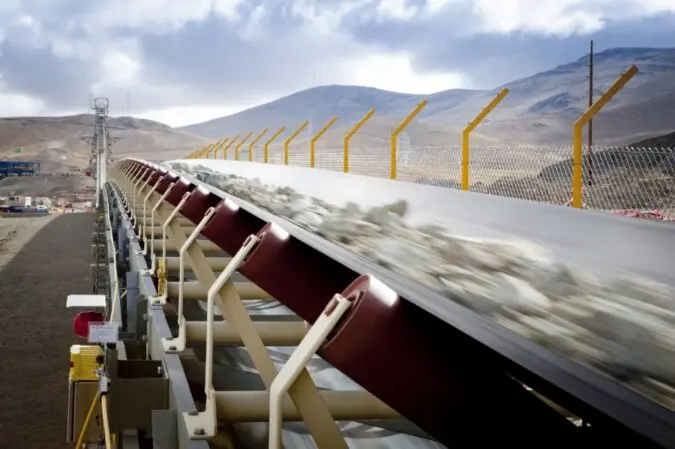
As mine owners sharpen their focus on reducing carbon emissions, optimizing the design of overland conveyor systems can play a key role in success. How can these systems best be configured to meet both operational and economic requirements, as well as environmental performance expectations?
The Carbon Comparator, a new tool developed by Bechtel is helping to answer that question.
The Carbon Comparator enables us to perform a detailed assessment of various design criteria. And the results might be a surprise to some operators in the industry.
What is the Carbon Comparator tool?
Having data to support decision-making on carbon-reduction programs has always been a challenge. The Carbon Comparator allows us to generate estimates of embodied and operational greenhouse gas (GHG) emissions for multiple design scenarios, which can then be used as part of our multi-criteria assessment for optimizing project-specific designs. Through visualization of critical data for cost and carbon comparisons, the tool allows our customers to select the best technology and equipment options.
The challenge:
As designers of mining facilities, we play a significant role in defining a mine’s overall GHG emissions performance. This demands greater awareness of all the GHG emissions sources, including Scope 3 emissions, which will make up an increasing fraction of emissions as power generation sources shift to renewable energy.
Traditionally overland conveyors are designed to operate “as fast as practical,” achieving benefits of reduced tensions, width, mechanical equipment masses, structural steel, and concrete quantities. Higher belt speeds reduce capital cost and improve project economics. However, operating at higher speeds also introduces operating costs through increased energy losses and wear rates.
Using the Carbon Comparator tool, we studied the lifecycle emissions from an overland conveyor under a range of design parameters to demonstrate how the design criteria and design decisions impact GHG emissions and project economics. For this assessment we developed a study project with a single overland conveyor located in the Pilbara region of Western Australia, using inputs based on our typical project execution and operational strategies for a project in this region.
The findings:
Eight conveyor configurations were developed over a broad range of belt speeds to allow evaluation of designs outside of the typical design norms as shown in Table 1. As expected, capital costs increase with belt width. Similarly, embodied carbon increases with belt width, albeit at greater sensitivity.
Table 1 Capitol Costs and Embodied Carbon
Option
Capital Cost Index
Embodied Emissions(t CO2e)
Embodied Carbon Index(Relative to Base)
Option 1 2400mm
1.16
1,444
1.25
Option 2 2000mm
1.05
1,316
1.14
Option 3 1800mm (100% CEMA CSA)
1.03
1,264
1.09
Option 4 1800mm (90% CEMA CSA)
1.04
1,270
1.10
Option 5 1800mm (80% CEMA CSA)
1.01
1,283
1.11
Option 6 1600mm Base Case
1.00
1,157
1.00
Option 7 1400mm
0.98
1,113
0.96
Option 8 1200mm
0.94
1,141
-1%
The current “as fast as practical” design paradigm holds for capital costs and embodied emissions. However, it may result in a sub-optimal solution over the operational life of the system.
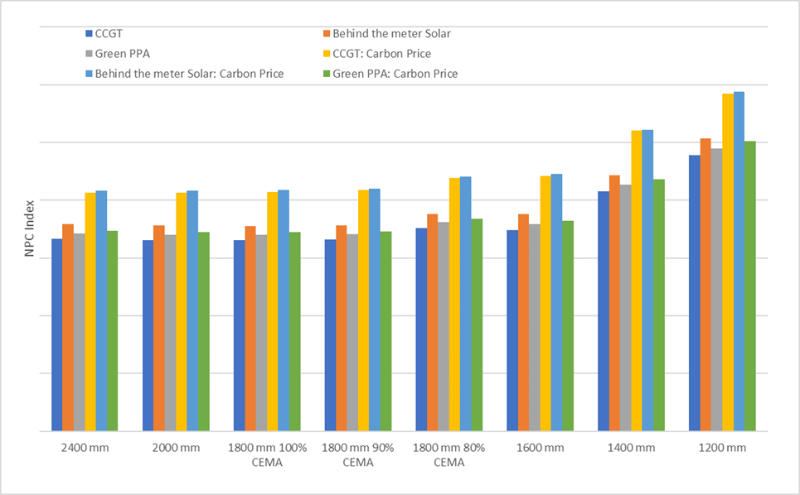
To evaluate the lifecycle impacts, we ran our model using a 20-year operational life, considered three different power supply options, and evaluated two carbon pricing models. The total emissions and Net Present Cost (NPC) for each of the options are summarised in the following figures and tables.
Table 2 Life Cycle Emissions
Option
Life Cycle Emissions(kt CO2e)
Life Cycle Emissions Index(Relative to Base)
CCGT
Behind the meter (unfirmed) solar
Green Power Purchase AgreementPPA
Combined cycle gas turbineCCGT
Behind the meter (unfirmed) solar
Green PPA
Option 1 2400mm
48.5
35.8
2.5
0.84
0.62
0.04
Option 2 2000mm
50.1
37.1
2.8
0.87
0.64
0.05
Option 3 1800mm (100% CEMA CSA)
51.3
38.0
2.9
0.89
0.66
0.05
Option 4 1800mm (90% CEMA CSA)
52.7
38.9
2.8
0.91
0.67
0.05
Option 5 1800mm (80% CEMA CSA)
52.5
39.1
3.7
0.91
0.68
0.06
Option 6 1600mm Base Case
57.7
42.7
3.4
1.00
0.74
0.06
Option 7 1400mm
63.8
47.8
5.6
1.11
0.83
0.10
Option 8 1200mm
65.4
49.5
7.9
1.13
0.86
0.14
Scope 3 emissions from each of the options varied, with higher belt speeds resulting in greater proportions of Scope 3 emissions. The total Scope 3 emissions for Options 1 through 4 were approximately 5%, increasing up to 11% for Option 8. The increase in Scope 3 emissions is driven by the reduced mechanical equipment life and associated increase in site labour. The most significant contributor to the increase was the conveyor belt.
The result:
For this configuration over the 20-year life with power supplied by CCGT, the operational emissions were approximately 50 times the embodied emissions. Reducing the belt speed and increasing the belt width reduced lifecycle emissions by approximately 10%, at a marginal abatement cost of between -$144 to -$171 per t CO2e.
Table 3 Net Present Cost Index
Option
US$0 Carbon Price
US$100 Carbon Price
CCGT
Behind the meter (unfirmed) solar
Green PPA
CCGT
Behind the meter (unfirmed) solar
Green PPA
Option 1 2400mm
0.96
1.03
0.99
1.19
1.20
1.00
Option 2 2000mm
0.95
1.02
0.98
1.19
1.20
0.99
Option 3 1800mm (100% CEMA CSA)
0.95
1.02
0.98
1.19
1.20
0.99
Option 4 1800mm (90% CEMA CSA)
0.95
1.02
0.98
1.20
1.21
0.99
Option 5 1800mm (80% CEMA CSA)
1.01
1.08
1.04
1.26
1.27
1.06
Option 6 1600mm Base Case
1.00
1.08
1.03
1.27
1.28
1.05
Option 7 1400mm
1.20
1.27
1.23
1.50
1.50
1.25
Option 8 1200mm
1.37
1.46
1.41
1.68
1.69
1.44
Figure 1 Net Present Cost Index
From the above it is clear that the faster-is-better design paradigm needs to be challenged given the need to achieve decarbonisation across the whole value chain. Using a structured approach during the design phase with consideration of the lifecycle emissions can result in facility designs that reduce operational emissions and improve the overall project economics.
Tom HicksManager of Decarbonisation, Mining & Metals
Connecting Communities: Bechtel’s Partnership with Bridges to Prosperity
By: Chris Jennions & Sam Belknap
Since 2016, Bechtel has partnered with Bridges to Prosperity (B2P), a nonprofit that builds trail bridges in rural areas across Ethiopia, Rwanda, and Uganda, giving communities year-round access to essential services. Together, B2P and Bechtel have completed eight bridges in...
Building Smarter: Bringing Digital Innovation to Government Projects
By: Ben Souther
Over the last few decades, digital innovation has improved construction, driving efficiency at every stage of the project lifecycle. Yet government construction—namely nuclear facilities and other high-security builds—has been slower to adopt these tools.
To Unlock the Next Wave of Pumped Storage Hydropower, Stakeholders Must Embrace Partnership
By: Andrew Patterson
By 2050, the U.S. will require an estimated 36 GW of new PSH capacity—more than double what exists today—to meet growing energy security and grid stability needs. However, realizing this potential is far from straightforward.
Bechtel Selected for Preparatory Engineering on Oklahoma Aluminum Project
Bechtel has been selected by Emirates Global Aluminium (EGA) and Century Aluminum to perform preparatory engineering and early execution planning for a new primary aluminum smelter in Inola, Oklahoma.
Bechtel Names John Platt Senior Vice President, EPC Transformation
Bechtel today announced that John Platt, a Bechtel Senior Vice President, has been appointed to lead EPC transformation for the company’s enterprise-wide efforts to improve EPC productivity through advanced digital technologies, artificial intelligence, automation, and robotics.
Landmark Metro Rail Project Advances with the Support of Bechtel Consortium
Bechtel, a core member of the Sepulveda Transit Corridor Partners (STCP) consortium, alongside Meridiam and American Triple I (ATI), welcomes the Los Angeles County Metropolitan Transportation Authority (Metro) Board of Directors’ vote to select a modified version of its alternative for a high-capacity, fully underground...
Bechtel has been selected as Delivery Partner for Perth Airport’s multi-billion-dollar expansion and upgrade program - one of the largest aviation infrastructure projects in Australasia.
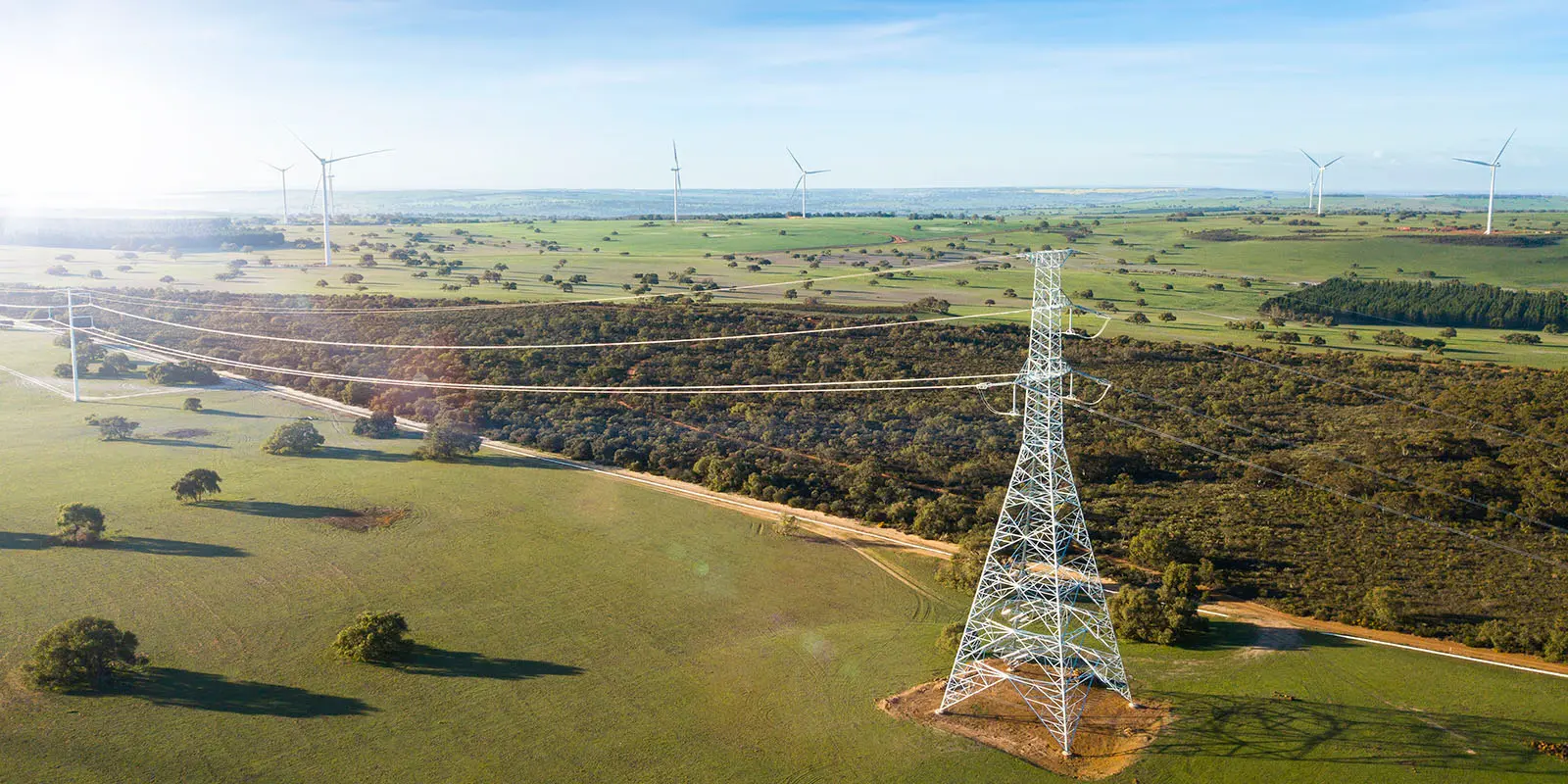
Bechtel and Western Power are celebrating six-months of partnership on Clean Energy Link - North, a major transmission network upgrade project to enable the connection of more renewable energy sources as part of Western Australia’s clean energy transition.
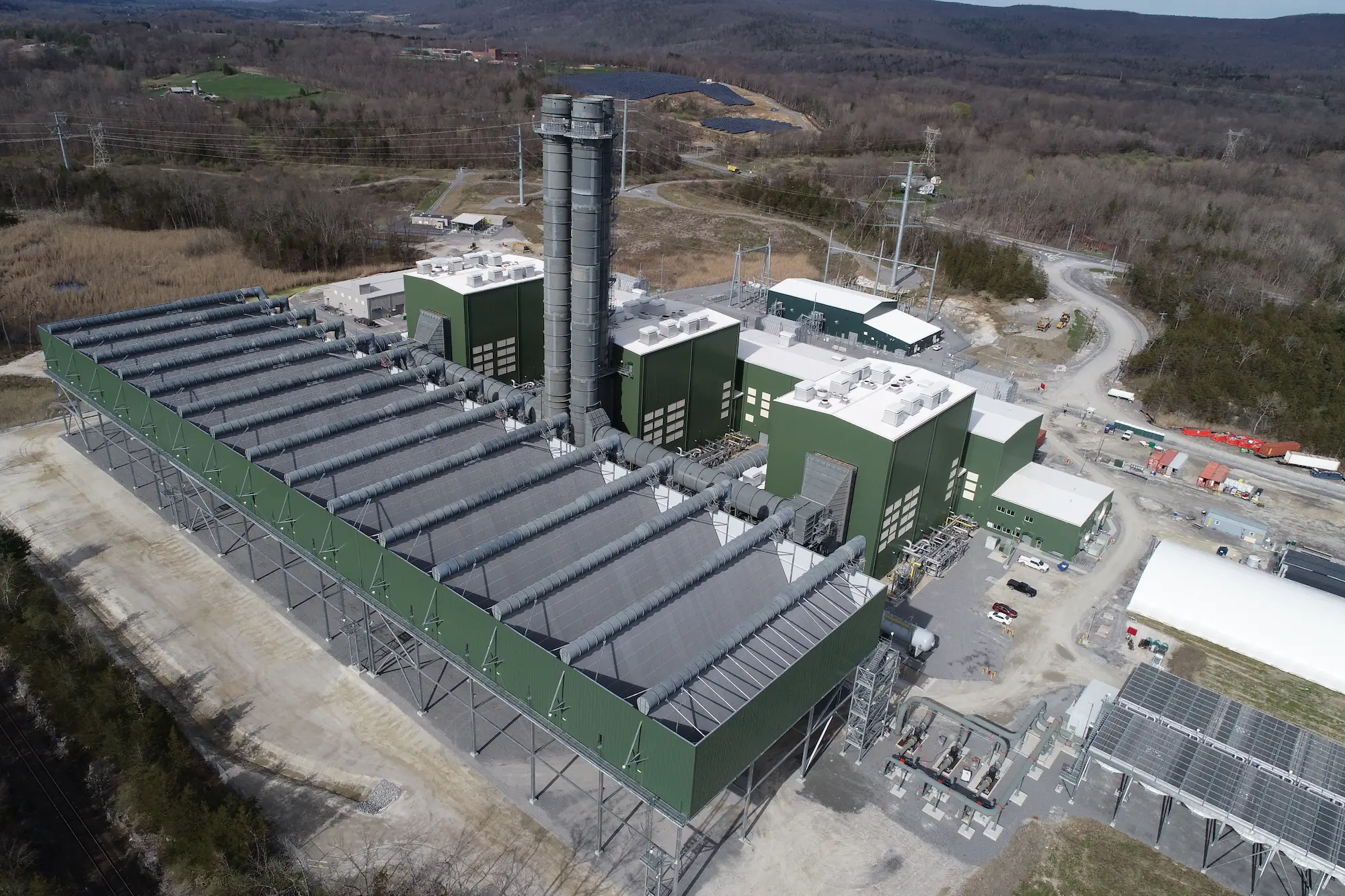
Producing Reliable Energy to Power One Million Homes Bechtel partnered with Cricket Valley Energy LLC, an affiliate of Advanced Power, to deliver a new, 1,100-megawatt combined-cycle power facility in Dover, New York. Built on a dormant industrial site, the Cricket…